



When it comes to strength training, two popular options dominate the fitness landscape: free weights and machines. Big gyms often offer an array of machines, enticing gym-goers with their ease of use and versatility. However, an increasing number of fitness enthusiasts are recognizing the tremendous benefits of incorporating free weights into their workouts. So which is better if you are looking to start strength training?

The Appeal of Machines
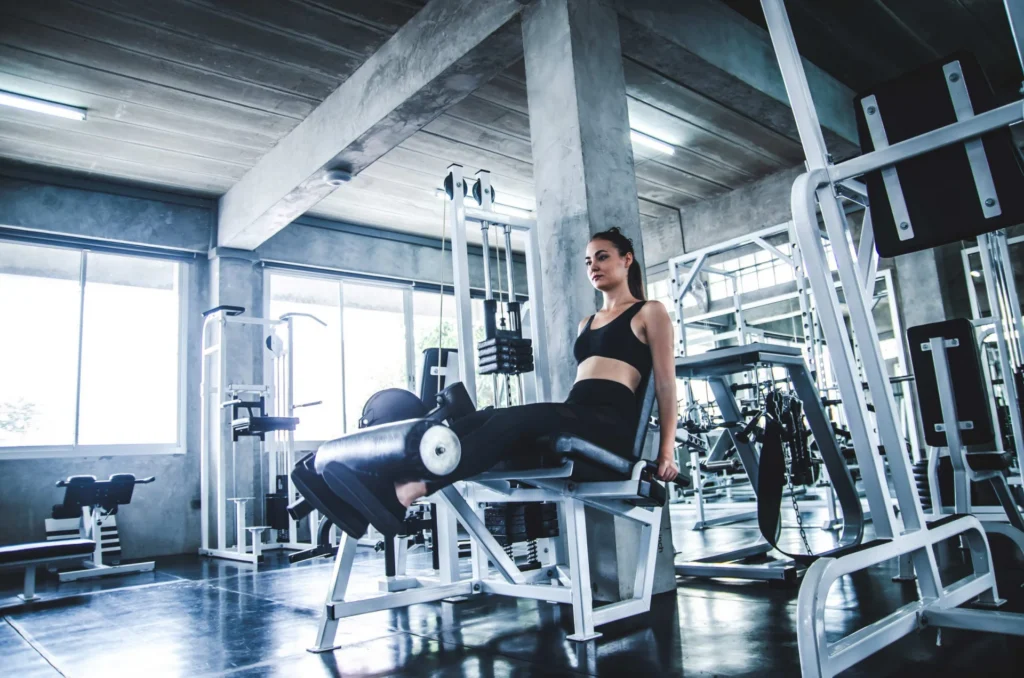
Big gyms are known for their vast selection of machines, and there’s a good reason for it. Machines offer convenience and accessibility, making them an appealing option for beginners and those looking for a straightforward workout experience. They provide a controlled movement pattern, reducing the risk of injury and making them particularly suitable for individuals with limited mobility or those recovering from an injury.
Furthermore, machines often feature diagrams and instructions, making them easy to use without much prior knowledge or instruction. They can target specific muscle groups, enabling individuals to isolate and work on particular areas of their body. This level of customization makes machines valuable tools for those with specific fitness goals or rehabilitation needs.
The downside? Machines are restricted to a fixed range of motion, offer limited benefits for developing real-world functional strength, and typically won’t deliver results as efficiently as free weights.
The Power of Free Weights
While machines have their advantages, free weights offer a whole new level of benefits for strength training. Free weights, such as dumbbells, barbells, and kettlebells, require greater stabilization and engage multiple muscle groups simultaneously. This results in enhanced muscle coordination and functional strength, which is crucial for real-life activities and sports performance.
- Core Strength and Stability: Free weights engage the core muscles by requiring balance and control. This activates deep stabilizer muscles in the abdomen, back, and hips, improving posture and reducing the risk of injury.
- Greater Range of Motion: Free weights allow a broader range of motion compared to machines, activating more muscle fibers and promoting more complete muscle development. Compound movements like squats, deadlifts, and bench presses efficiently target multiple muscle groups at once.
- Functional Strength and Muscle Development: Free weights mimic real-life movements more closely, improving strength that carries over into everyday activities and sports. They also engage stabilizing muscles and connective tissues, promoting balanced development and reducing imbalances.
- Versatility and Progression: Free weights offer nearly endless exercise variations. You can easily adjust load, grip, and movement patterns, making them adaptable for all fitness levels and ideal for long-term progression.
So what’s the downside of free weights? You need to make sure you are using them correctly.
To fully harness the benefits of free weights, it is crucial to learn proper form from a knowledgeable trainer or coach. While machines offer guided movement, free weights demand precise execution to ensure safety and maximize results.

Having someone to guide and correct your form is invaluable, especially for beginners. Proper technique minimizes the risk of injury, optimizes muscle activation, and ensures effective targeting of specific muscle groups.
At Phoenix Fitness & Martial Arts, we can help you get started safely and effectively through our personal training, Total Strength weight training program, or small group Strength & Cardio sessions. Let’s get started!